
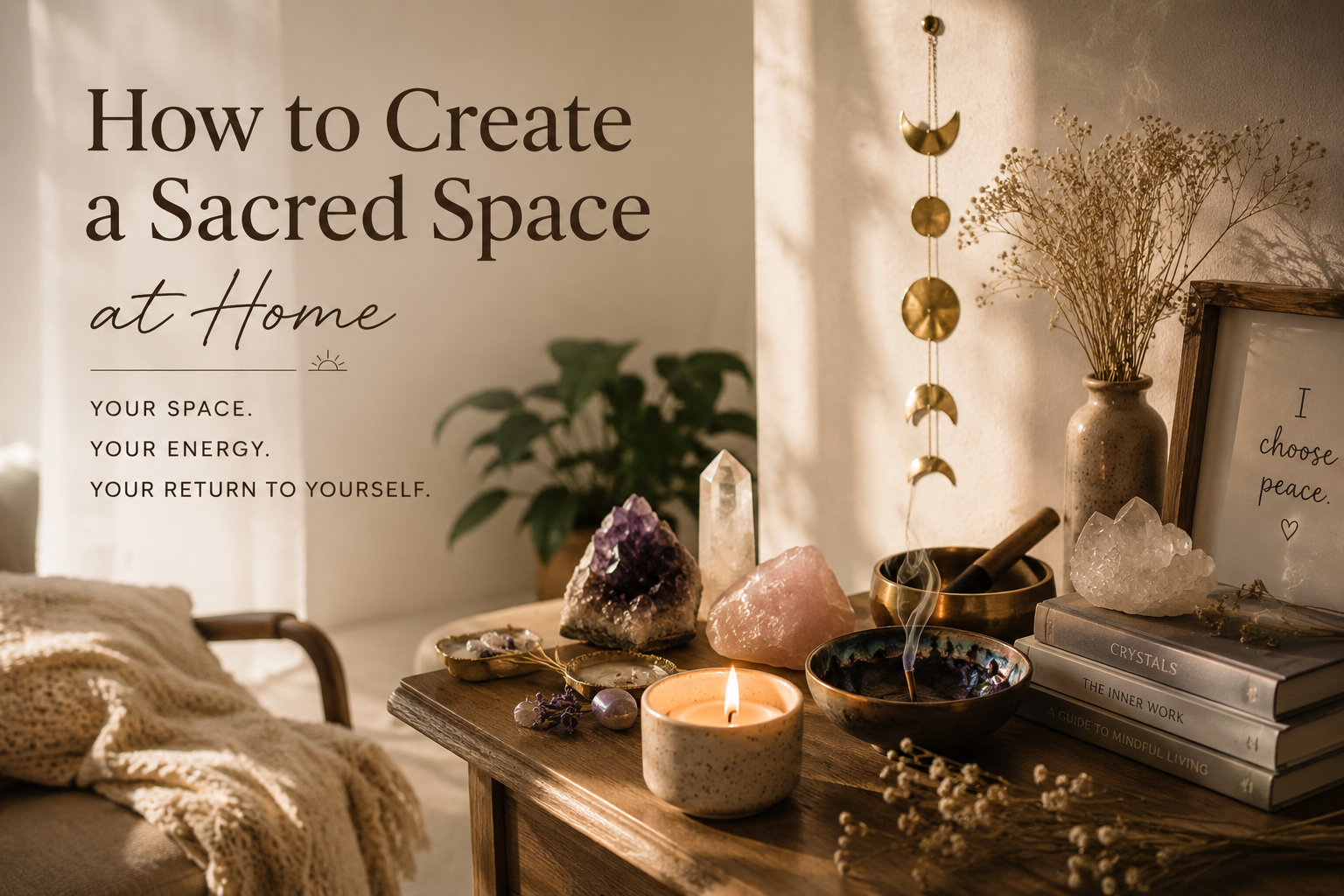
A sacred space does not need to look perfect.
It does not need expensive furniture, a large altar, or an entire meditation room.
A sacred space is simply a place that helps you feel emotionally safe, calm, and connected to yourself.
In a world filled with noise, screens, stress, and overstimulation, creating even one intentional corner at home can completely shift the energy of your daily life.
What Is a Sacred Space?
A sacred space is an environment created with intention.
It’s a place where you can:
- breathe more deeply
- reconnect emotionally
- meditate or journal
- practice rituals
- rest your nervous system
- feel grounded after stressful days
For some people, it’s an altar.
For others, it’s a bedside table, desk corner, or candle shelf.
The goal is not aesthetic perfection.
The goal is emotional atmosphere.
Step 1 — Choose a Calm Corner
Start small.
You do not need an entire room.
Good places for sacred spaces:
- bedside tables
- reading corners
- desks
- shelves
- window areas
- meditation corners
Choose somewhere that naturally feels quieter or softer to you.
Consistency matters more than size.
Step 2 — Remove Visual Noise
Before adding spiritual tools, clear unnecessary clutter.
Physical clutter often creates mental clutter.
Try removing:
- random packaging
- tangled cords
- unused items
- stressful visual reminders
A sacred space should feel breathable.
Even a clean surface with one candle can feel deeply healing.
Step 3 — Add Objects with Intention
Now you can slowly build the atmosphere.
Popular sacred space items:
- crystals
- candles
- incense
- flowers
- tarot or oracle cards
- ritual bowls
- meaningful jewelry
- journals
- soft fabrics
- spiritual books
Choose objects that emotionally resonate with you — not just items that “look spiritual.”
Best Crystals for a Sacred Space
Some crystals work especially well in home rituals and calming environments.
Rose Quartz
Supports softness, emotional healing, and self-love.
Amethyst
Creates a calming, meditative atmosphere.
Clear Quartz
Brings clarity and amplifies intention.
Smoky Quartz
Helpful for grounding and energetic protection.
Citrine
Adds warmth, confidence, and uplifting energy.
Step 4 — Create a Ritual Atmosphere
Your senses affect your emotional state.
Small sensory details can transform a space quickly.
You can add:
- warm lighting
- soft instrumental music
- incense or ritual smoke
- linen textures
- calming scents
- water ripple reflections
- gentle colors
The goal is to create a space your nervous system wants to return to.
Step 5 — Use the Space Regularly
A sacred space becomes meaningful through repetition.
You don’t need to perform elaborate rituals every day.
Simple practices are enough:
- morning tea in silence
- pulling one tarot card
- lighting incense before bed
- journaling for five minutes
- setting a daily intention
Over time, the space begins to hold emotional memory and comfort.
Sacred Spaces Are Personal
Your sacred space does not need to follow rules from social media.
It can be minimal.
It can be feminine.
It can be dark, soft, colorful, modern, or simple.
What matters is how it makes you feel.
The most powerful spaces are the ones that genuinely support your emotional state.
Final Thoughts
Creating a sacred space is really about creating emotional permission.
Permission to:
- slow down
- reconnect
- breathe
- feel safe
- return to yourself
Even one intentional corner can change the atmosphere of an entire home.
And sometimes, healing begins with simply making space for yourself again.